Successful Pregnancy Outcome in Eisenmenger Syndrome in Pregnancy: A Case Report
1 Department of Family Medicine, International Islamic University, Malaysia
Citation: Roslan SR, Adienuar AN, Azwanis AH. Successful Pregnancy Outcome in Eisenmenger Syndrome in Pregnancy: A Case Report. SF J Fam Med. 2021;4(1):1031.
Abstract
We present an antenatal case with established Eisenmenger Syndrome (ES) who refused termination of pregnancy. Her pregnancy continued until an emergency caesarean section for IUGR at 31 weeks gestation. This case report illustrates an example of a good health care model especially for primary care level that led to a successful pregnancy outcome in a high-risk patient.
Keywords: Eisenmenger Syndrome in pregnancy; High risk pregnancy; Primary care
Introduction
Pregnancy with Eisenmenger syndrome is rare. Maternal mortality has been estimated to be around 30-50% in pregnancy with Eisenmenger syndrome [1-3]. Fetal or early neonatal deaths are due to maternal death; decompensation; intra-uterine growth retardation and premature delivery [4]. Patients are usually advised to avoid pregnancy with termination of pregnancy (TOP) within 10 weeks gestation if pregnancy already occurred. Should the patient refused TOP, a multidisciplinary team approach is necessary for a successful pregnancy outcome [5].
Case Report
A 36 years old G2 P0+1, presented to the health clinic after a period of amenorrhea. She has Ventricular Septal Defect (VSD) complicated with ES and pulmonary hypertension which was diagnosed during her first pregnancy 3 years ago. The pregnancy was terminated, Implanon inserted and had regular cardiology follow-ups. After 3 years, she went to the private clinic to remove her Implanon as she planned for pregnancy despite knowing the risks.
Ultrasound examination at health clinic confirmed the pregnancy at 7 weeks gestation. The Obstetrics and Cardiology teams were immediately informed, and she was seen within the same week however refused their advice for TOP.
At 11 weeks of gestation, a family conference involving the O&G, anesthetist, cardiologist, and a psychiatrist was held. Despite strong advice, patient decided to continue with the pregnancy. Hence, a pregnancy care plan was established: S/CClexane at 12 weeks onwards to reduce the risk of pulmonary embolism. 2 weekly hospital appointment to monitor patient’s clinical conditions with 4 weekly Echocardiogram (ECHO) assessment. Oxygen therapy at 18 weeks gestation to alleviate pulmonary hypertension. Delivery at 28 weeks of gestation. Permanent sterilization after delivery.
She was started on Tab Bisoprolol 2.5mg OD and Tab Sildenafil for the pulmonary hypertension. The hematologist was also summoned as she has thrombocytopenia secondary to portal hypertension and hypersplenism. The primary care team reviewed her in between the two weekly hospital review.
At 21 weeks gestation, echocardiogram showed worsening pulmonary pressure. She refused admission for oxygen therapy despite counselling with spouse. A close 2 weekly fetal growth surveillance was then carried out at the primary care clinic.
At 28 weeks gestation, the Family Medicine Specialist (FMS) noted IUGR but she refused admission again. She agreed for admission a week later following absence of End Diastolic Flow on Doppler. IM Dexamethasone 6 mg was given. At 31 weeks 6 days, she underwent emergency caesarean. She was admitted to the intensive care post operatively. Her baby was admitted to the NICU weighing 1.1 kg. Prior discharge, Implanon was inserted by the Obstetrics team as she refused permanent sterilization. At day 14 post-partum, despite her unstable medical condition, she requested discharge.
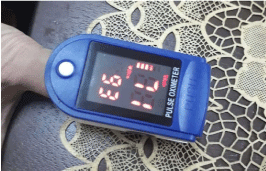
is 71%, with heart rate of 93 bpm.
compared to a nurse’s hand on top.
Shortly after discharge, she was noted to have failure symptoms with oxygen saturation of 60-65% on pulse oximetry. She also refused the Clexane injections. After much persuasion, she continued with Clexane but still refused admission and attending the health clinic follow up. In view of this, the primary care team led by the FMS developed a plan: A WhatsApp management group was formed to facilitate patient monitoring and decision making. Daily visit until 42 days to review patient’s condition, vital signs and pulse oximetry. To ensure compliance to Clexane and other medications.
Despite the challenging clinical and patient issues, her health condition improved and underwent the postnatal period safely. She was then put under 3 monthly follow up at our local health clinic to assess her condition and her Implanon.
Discussion
Primary care giver deals with many high-risk pregnancy cases before, during and after pregnancy, thus playsone of the major roles in the management. Now a day, many high-risk pregnancy mothers proceed with the pregnancy despite the risks. In Malaysia, majority of pregnant mother attended the Government Health Clinic for follow up. Thus, the need for a good health care model to manage these high-risk mothers.
ES occurs when untreated congenital cardiac defect with intra-cardiac communication leads to pulmonary hypertension, reversal of flow, and cyanosis. Right-to-left shunting causes hypoxemia and subsequently polycythemia. Reduced peripheral vascular resistance during pregnancy and maternal tachycardia can worsen right-to-left shunting, exacerbating hypoxemia and cyanosis.
ES with severe pulmonary arterial hypertension of any cause is classified under WHO class IV where maternal mortality is 25-50% [6,7]. In a scenario whereby termination of pregnancy is refused, patient’s autonomy must be respected. An individualized pregnancy care plan must be clearly written with good communication between the managing teams.
During follow-up, patient’s blood pressure, pulse rate, rhythm and failure symptoms must be assessed. Auscultation to assess change in murmur or pulmonary oedema is recommended. Oxygen saturations must be checked each trimester or more often if there are any clinical signs of deterioration [8]. A positive engagement strategy is opted to ensure patient's adherence and cooperation with the management plans.
Involvement of spouse/family members in managing a high-risk patient impacts on the quality of care and patient outcome. Family could provide relevant additional information, contributing to decision-making, assisting care in the hospital, improving quality and safety of care, and providing care at home or outside the hospital [9].
This case illustrates how the coordination of primary care management headed by the FMS is essential to ensure optimal care plan. Modern technology such as WhatsApp aids in monitoring patient’s condition and improve communication within the managing team [10].
Lastly, pre-conception care is important to detect high risk mother. Most high-risk mothers are offered permanent sterilization, but a number of them are also on long-acting reversible contraception. Thus, general practitioner needs to assess properly the risk before stopping any contraception, and to ensure follow up all high-risk mother on reversible contraception.
References
- Jones AM, Howitt G. Eisenmenger Syndrome in Pregnancy. Br Med J. 1965; 1: 1627-1631.
- Gleicher N, Midwall J, Hochberger D, Jaffin H. Eisenmenger's syndrome and pregnancy. Obstetrical & Gynecological Survey. 1979; 34: 721-741.
- Avila WS, Grinberg M, Snitcowsky R, Faccioli R, Da Luz PL, Bellotti G, et al. Maternal and fetal outcome in pregnant women with Eisenmenger’s syndrome. Eur Heart J. 1995; 16: 460-464.
- Weiss BM, Zemp L, Seifert B, Hess OM. Outcome of pulmonary vascular disease in pregnancy: A systematic overview from 1978 through 1996. J Am Coll Cardiol. 1998; 31: 1650-1657.
- Yuan SM. Eisenmenger syndrome in pregnancy. Braz J Cardiovasc Surg. 2016; 31: 325-329.
- Regitz-Zagrosek V, Roos-Hesselink JW, Bauersachs J, Blomström- Lundqvist C, Cífková R, De Bonis M, et al. 2018 ESC Guidelines for the management of cardiovascular diseases during pregnancy. European Heart Journal. 2018; 39: 3165-3241.
- Todd AB, Mosley MH. CPG Heart Disease in Pregnancy II Edition. 2009.
- Franklin WJ, Rokey R, Foley MR, Belfort MA. Cardiac disease and pregnancy. Crit Care Obstet. 2018; 13: 699-730.
- Jazieh A, Volker S, Taher S. Involving the family in patient care: A culturally tailored communication model. Glob J Qual Saf Healthc. 2018; 1: 33-37.
- Opperman CJ, Van Vuuren MJ,. WhatsApp in a clinical setting: The good, the bad and the law. 2018; 11: 102-103.
Figures