Physical Exercise in Pregnancy
1 Physical Medicine Rehabilitation Department, Vila Nova de Gaia / Espinho Hospital Center, Portugal
2 Physical Medicine Rehabilitation Department, Porto Hospital and University Center, Portugal
Citation: Marques dos Santos J, Brito R, Gonçalves JV, Campolargo A. Physical Exercise in Pregnancy. SF J Phys Rehabil Med. 2021;4(1):1020.
Abstract
Introduction: Exercise is recommended in pregnancy, however, many doubts arise due to the fear of possible harmful effects for the mother and the fetus. We intend to gather the available information about the anatomical and physiological changes that occur during pregnancy and how the prescription of exercise should be carried out in order to ensure safety for the health of the pregnant and of the fetus.
Methods: Search at pubmed limited to articles in Portuguese, English and Spanish from the last 5 years. Review articles, systematic reviews and meta-analyzes were included. We consult the ACSM book. We selected 20 articles according to the relevance according to the pertinence to the theme.
Results: Several physiological and anatomical changes will condition the adaptation of physical exercise. There are medical conditions that are absolute or relative contraindications to exercise and the physician must be aware of when prescribing a training program. It is important to explain to the pregnant woman the warning signs that motivate the interruption of training. The training program prescription must follow the FITT principles.
Physical exercise seems to have a beneficial effect on the fetus which translates into less fetal stress at birth.
Conclusions: Pregnant women should been couraged to continue or start to exercise, modifying their training program as necessary. All active women should be examined periodically to check the effects of physical exercise on the development of the fetus. Women with complicated pregnancy due to medical or obstetric reasons should be carefully evaluated before recommending physical exercise.
Keywords: Pregnancy; Physical exercise; Physical activity; Pregnant; Fetus
Abbreviations
ACOG: American College of Obstetricians and Gynecologists; RCOG: Royal College of Obstetricians and Gynaecologists; ACSM: American College of Sports Medicine; FITT: Frequency, Intensity, Time, Type
Introduction
The World Health Organization and the American College of Sports Medicine say that the beneficial effects of exercise on most adults are indisputable and that the benefits far outweigh the risks. Physical inactivity is the fourth leading risk factor for early mortality worldwide. In pregnancy, physical inactivity and excessive weight gain were recognized as independent risk factors for maternal obesity and pregnancy-related complications, including gestational diabetes mellitus [1-4].
According to ACOG, pregnancy is an ideal time to maintain or adopt a healthy lifestyle and it is recommended that physical exercise be integrated in this period due to the vast beneficial effects and few risks for the pregnant woman. 150 minutes of moderate-intensity aerobic activity per week, spread over the week, are recommended. Many doubts arise about how to prescribe physical exercise at this stage due to the fear of spontaneous abortions, premature births and fetal growth restriction. As such, adaptations to the training routine should be made due to anatomical and physiological changes resulting from pregnancy and the needs of the fetus. Before prescribing and starting physical exercise, a thorough clinical assessment of the pregnant woman's health should be carried out to ensure that there are no contraindications to the practice. Pregnant women should be encouraged to join a training program that includes an aerobic and muscle-building component. Pregnant women with high-risk pregnancies should be evaluated clinically before any physical activity is recommended, however, the restriction of physical exercise shouldnot be performed routinely as a way to avoid premature birth [1-4].
Methods
A search was performed on the Pubmed search engine with the keywords pregnancy, physical activity or physical exercise. The search was limited to review articles, systematic review and meta-analysis in Portuguese, English and Spanish in the last 5 years. 98 articles were obtained. After reading the title and abstract, articles on physiological and anatomical changes, effects of physical exercise on the pregnant woman and the fetus and the prescription of a training program during pregnancy were included. Twenty articles were selected for this review. The ACSM manual “Guidelines for Exercising Testing and Prescription” was consulted, namely, the chapter on the prescription of physical exercise in pregnancy.
Results
Physiological and anatomical changes during pregnancy
Pregnancy results in anatomical and physiological changes that must be considered when prescribing physical exercise [2-4].
During this period, the woman increases her body weight and there is a change in the position of the center of gravity, which results in excessive lordosis, which is why 60% of pregnant women have low back pain [2-4].
There is an increase in blood volume, heart rate, cardiac output and a decrease in systemic vascular resistance. These hemodynamic changes establish the necessary circulatory reserve for the pregnant woman and the fetus at rest and during exercise.
The supine position during exercise after 16 weeks of gestation prevents venous return due to compression of the vena cava by the pregnant uterus, so it must be taken into account when scheduling a workout [2-4].
In pregnancy, ventilation per minute increases up to 50% of baseline, mainly as a result of the increase in tidal volume. There is a physiological decrease in the pulmonary reserve, which impairs the performance of anaerobic and aerobic exercises and also the progression in terms of training load, limiting the performance of the pregnant woman, especially if she is overweight. However, aerobic training in pregnancy has been shown to increase aerobic capacity in pregnant women with or without excess weight [2-4].
During pregnancy, an increase in O 2 consumption and an increase in the basal metabolic rate is related to increased heat production. Pregnant women should stay well hydrated, wear loose clothing and avoid high heat and humidity to protect against heat stress, especially during the first trimester. Although exposure to heat sources such as hot tubs, saunas are associated with an increased risk of neural tube defects, exercise is not expected to increase core temperature [2-4].
Other changes that occur during this period and that should have been taken into account during the prescription of physical exercise are greater hyper mobility and joint laxity mediated by hormones, namely, estrogens, progesterone and mainly relaxin, increased oncotic pressure, which translates in lower limb edema and weight gain, mainly in the 3 rd trimester, increased renal blood flow with increased glomerular filtration rate, changes in glucose metabolism with earlier glucose spikes and increased insulin sensitivity in the first half of pregnancy , and resistance to it in the second half, and changes in lipid metabolism with increased concentration of free fatty acids. Gastrointestinal adaptations translate into nausea and vomiting due to a decrease in gastric emptying and relaxation of the lower esophageal sphincter that allows a reflux of the stomach contents into the esophagus. Digestion at the intestinal level occurs more slowly due to pressure exerted by the uterus on the rectum and lower part of the intestine, with an increase in water absorption at this level which can lead to constipation. This constipation can be aggravated by the decrease in involuntary muscle contractions that move food along the intestine due to the high levels of progesterone present during pregnancy [2-6].
Fetal responses to maternal exercise
Studies show a minimal to moderate increase in fetal heart rate of 10 to 30 beats per minute above baseline during or after exercise. There do not appear to be significant differences (greater than 400g) in fetal birth weight in pregnant women who exercise compared to sedentary women. To date, it is not possible to define with total certainty a maximum value in terms of duration and/or intensity from which the practice of physical exercise for the fetus is harmful. The clinical evidence of fetal stress, shown by the presence of meconium, fetal heart rate pattern and Apgar score is less common in women who exercise during pregnancy, although with a lower training volume than they practiced, compared to well-conditioned athletes who stopped exercising before the end of the first trimester. Pregnant women should be informed that the practice of physical exercise does not translate into a greater risk of complications for the pregnant woman or the fetus [7-11].
Benefits of exercise during pregnancy
The most common complaints during pregnancy such as fatigue, varicose veins and edema of the extremities are reduced in pregnant women who exercise. It is found that the most active pregnant women have less insomnia, less stress, less anxiety and depression. There is some evidence that exercises that support body weight, such as walking and running, reduce the duration of labor and the risk of complications during it [2,3,12-16].
The effects of a sedentary lifestyle during pregnancy should be considered, both by the expectant mother as well as by her attending physician. Among which loss of muscle mass, excessive weight gain during pregnancy, increased risk of developing diabetes pregnancy and pre-eclampsia, development of varicose veins, increase in physical complaints dyspnoea and low back pain resulting from physical changes that occur during pregnancy and a less psychological adaptation to this unique period in the woman's life [13-17].
Exercise improves glycemic control in pregnant women with gestational diabetes and may have a important role in its prevention [5-7].
Absolute Contraindications
Evidence suggests as absolute contraindication to exercise hemodynamically significant heart disease or other serious cardiovascular diseases, incompetent cervix, cervical failure or cerclage, intrauterine growth restriction, multiple pregnancy with risk of premature delivery, persistent hemorrhage on second or third trimester, placenta previa after 26-28 weeks of gestation, pre-eclampsia or pregnancy-induced hypertension, premature labor during pregnancy, restrictive lung disease or other severe respiratory pathologies, rupture of membranes, severe anemia, high blood pressure uncontrolled or poorly controlled, uncontrolled thyroid disease, uncontrolled type 1 diabetes or other serious systemic diseases, unexplained persistent vaginal bleeding, in the second or third quarter [2-5].
Relative Contraindications
As relative contraindications to physical exercise, the evidence suggests anemia, cervical dilation, chronic bronchitis, mild/ moderate respiratory disease and other respiratory pathologies, eating disorders, extreme morbid obesity, heavy smoking habits, style extremely sedentary lifestyle, history of spontaneous preterm delivery, preterm labor, spontaneous abortion or fetal growth restriction, malnourished or extremely underweight pregnant woman, mild/ moderate cardiovascular disease, musculoskeletal pathology, poorly controlled epileptic disease, Type 1 Diabetes Mellitus poorly controlled, recurrent abortions [2-4].
Warning signs to discontinue exercise during pregnancy
Loss of amniotic fluid or other loss of vaginal fluid, pain or swelling of the twin region, chest pain, dizziness, syncope that does not resolve at rest, headache, lack of muscle strength or balance during practice, regular painful uterine contractions, dyspnoea and bleeding vagina [2-4].
Physical Exercise Prescription
General considerations
To assess the health of pregnant women, before starting a training program, the Canadian Society for Exercise Physiologists Physical Activity Readiness Medical Examination for Pregnancy (PARmed-X for Pregnancy) or the electronic version (ePARmed-X +) should be applied [1].
In the absence of obstetric or medical complications, exercise recommendations during pregnancy are consistent with recommendations for healthy adults, 150 minutes per week of moderate intensity aerobic exercise or 75 minutes per week of vigorous intensity aerobic exercise, spread over the week. There is no ideal number of days, the frequency of exercises during pregnancy should be regular, occurring throughout the week, and adjusted based on the total volume of exercise, that is, the number of days can vary based on the intensity and duration of the exercise. For previously inactive women, it is recommended to reduce the intensity and or duration instead of frequency. The exercise can be accumulated in shorter sessions (for example, 15 min) or performed continuously. A warm-up and a cool down of 10 to 15 min is suggested, at the beginning and end of the training session. Previously inactive women should progress by 15 min/day (<3 days a week) for approximately 30 min/day on most days of the week. The goals of the training program and progression can vary at different times during pregnancy, and exercise routines should remain flexible. Kegel exercises that strengthen the pelvic floor are recommended to decrease the risk of incontinence during and after pregnancy [1-4,17-19].
FITT prescription (Frequency, Intensity, Time, Type)
Frequency: Aerobic training should be performed 3 to 5 days a week, strength training should be performed 2 to 3 times a week, with 48 hours of rest between workouts that focus on the same muscle group and flexibility training, 2 to 3 times per week. Week or ideally performed daily [1-4,17-19].
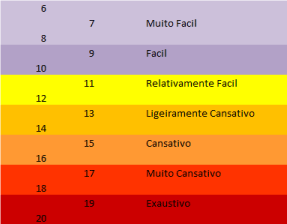
Intensity: The Borg scale (Figure 1) seems to be the most effective to monitor the intensity, the monitoring through the heart rate does not seem to be as reliable since the response of each pregnant woman seems to be different during the practice of physical exercise. The "conversation test" can be used when the pregnant woman is able to carry on a conversation while practicing physical exercise [17-19].
The pregnant woman must remain hydrated and nourished during training, vigorous intensity exercises for more than 45 min can cause hypoglycemia [1,2,17-19].
Aerobic training can be performed at moderate intensity (12-13 RPE) or vigorous intensity (14-17 RPE) in the case of women who are very active before becoming pregnant or who progress to high levels of fitness during pregnancy [17-19].
Strength training can be performed at an intensity that allows a varied number of sub-maximal repetitions 8 to 10 or 12 to 15, according to the intended goal, greater gain in muscle strength or greater muscle endurance, respectively [17-19].
Flexibility training should be performed with a feeling of slight discomfort or increased muscle tension when stretching [17-19].
Time: Aerobic training should be performed approximately 30 min/day, at least 150 min/week (moderate intensity) or 75 min/week (vigorous intensity) [17-19].
In muscle strength training, less active or sedentary pregnant women should start with only one set and the most active women can do 2 to 3 sets per exercise. The exercises should involve the main muscle groups, chest muscles, shoulders, back, abdomen, thighs and legs [17-19].
In flexibility training, stretches must be maintained for 10 to 30 seconds [17-19].
Type: Aerobic training can be performed with walking, running, taking more aerobic group classes, swimming or other aerobic water activities, dancing [17-19].
Strength training can be used using machines, free weights or body weight. Opting for exercises that encompass the main muscle groups, preferably compound or polyarticular exercises such as lunges, squats, chest press (seated) and shoulder press [17-19].
Flexibility training can involve static exercises, performed passively or actively, and dynamic stretching [17-19]. Yoga can be an option for this type of training [20].
Special considerations
Pregnant women should avoid contact sports due to the risk of falls or trauma to the mother and/or fetus. During training, they should avoid the valsalva maneuver, prolonged isometric contractions and static exercises in orthostatism [1-4].
After delivery, the return to sports should be gradual due to the normal de-conditioning that occurs during this period. Gradually restart 4 to 8 weeks after a vaginal delivery or 8 to 10 weeks (after medical advice) after a caesarean delivery. Women who, prior to pregnancy, had rigorous and more intense training routines are likely to return to sports earlier. The practice of light to moderate intensity exercise in the post-partum period is essential for the return to the pre-pregnancy body mass index and does not interfere with breast feeding [1-4,12,14].
Conclusions
Pregnancy is a period of a woman's reproductive life in which marked changes occur physiological and anatomical, however, these do not justify the interruption of the practice of physical exercise, but the adaptation of it for a healthier pregnancy.
The benefits of physical exercise are manifold, however, despite all the benefits, it is necessary to know the absolute and relative contraindications to physical exercise as well as the alarm signals for which it should be stopped.
The effects of exercise on the fetus deserve even more studies, however, the practice of exercise seems to bring several benefits such as a reduction in fetal stress over birth.
When prescribing an exercise program, the pregnant woman should be informed about which the most suitable and least suitable types of exercise (for example, a pregnant woman should not doing bench press exercises from the 16 th week of gestation), what is the intensity the one who should practice the exercise, for which the perceived effort/Borg scale, heart rate control and also the “conversation test” can be used. The frequency and duration of exercise for sedentary women should start with 15 minutes of exercise three times a week increasing up to 30 minutes every day. All women active during pregnancy should be evaluated periodically for check the effects of your exercise program on the development of the fetus and do adjustments if necessary. Returning to physical exercise after child birth should be done gradually.
References
- American College of Sports Medicine. ACSM's guidelines for exercise testing and prescription. Wolters Kluwer Health. 2018.
- ACOG Committee Opinion. Physical Activity and Exercise during Pregnancy and the Postpartum Period. Obstet Gynecol. 2020; 135: e178-e188.
- Bell B, Dooley MM. Exercise in pregnancy. Royal College of Obstetricians and Gynaecologists (RCOG). 2006.
- Newton E, May L. Adaptation of Maternal-Fetal Physiology to Exercise in Pregnancy: The Basis of Guidelines for Physical Activity in Pregnancy. Clin Med Insights Womens Health. 2017.
- Savvaki D, Taousani E, Goulis DG, Tsirou E, Voziki E, Douda H, et al. Guidelines for exercise during normal pregnancy and gestational diabetes: a review of international recommendations. Hormones. 2018; 17: 521-529.
- Doi S, Furuya-Kanamori L, Toft E, Musa OAH, Mohamed AM, Clark J, et al. Physical activity in pregnancy prevents gestational diabetes: A metaanalysis. Diabetes Res Clin Pract. 2020; 168: 108371.
- Laredo-Aguilero J, Gallardo-Bravo M, Rabanales-Sotos JA, Cobo-Cuenca AI, Carmona-Torres JM. Physical Activity Programs during Pregnancy Are Effective for the Control of Gestational Diabetes Mellitus. Int J Environ Res Public Health. 2020; 17: 6151.
- Leite C, Lira do Nascimento S, Helmo FR, Dos Reis Monteiro MLG, Antônia Dos Reis M, Miranda Corrêa RR. An overview of maternal and fetal short and long-term impact of physical activity during pregnancy. Arch Gynecol Obstet. 2017; 295: 273-283.
- Sanabria- Martínez G, Poyatos-León R, Notario-Pacheco B, Álvarez- Bueno C, Cavero-Redondo I, Martinez-Vizcaino V. Effects of physical exercise during pregnancy on mothers 'and neonates' health: a protocol for an umbrella review of systematic reviews and meta-analysis of randomized controlled trials. BMJ Open. 2019; 9: e030162.
- Michalek I, Comte C, Desseauve D. Impact of maternal physical activity during an uncomplicated pregnancy on fetal and neonatal well-being parameters: a systematic review of the literature. Eur J Obstet Gynecol Reprod Biol. 2020; 252: 265-272.
- Bauer I, Hartkopf J, Kullmann S, Schleger F, Hallschmid M, Pauluschke- Fröhlich J, et al. Spotlight on the fetus: how physical activity during pregnancy influences fetal health: a narrative review. BMJ Open Sport Exerc Med. 2020; 6: e000658.
- Dipietro L, Evenson KR, Bloodgood B, Sprow K, Troiano RP, Piercy KL, et al. Benefits of Physical Activity during Pregnancy and Postpartum: An Umbrella Review. Med Sci Sports Exerc. 2019; 51: 1292-1302.
- Chan C, Yeung E, Law B. Effectiveness of Physical Activity Interventions on Pregnancy-Related Outcomes among Pregnant Women: A Systematic Review. Int J Environ Res Public Health. 2019; 16: 1840.
- Ferrari N, Joisten C. Impact of physical activity on course and outcome of pregnancy from postnatal black. Eur J Clin Nutr. 2021.
- Rodríguez-Blanque R, Sánchez-García JC, Sánchez-López AM, Aguilar- Cordero AJ. Physical activity during pregnancy and its influence on delivery time: a randomized clinical trial. Peer J. 2019; 7: e6370.
- Wang J, Wen D, Liu X, Liu Y. Impact of exercise on maternal gestational weight gain: An updated meta-analysis of randomized controlled trials. Medicine. 2019; 98: e16199.
- Oliveira C, Imakawa T, Moisés E. Physical Activity during Pregnancy: Recommendations and Assessment Tools. Rev Bras Ginecol Obstet. 2017; 39: 424-432.
- Barakat R. An exercise program throughout pregnancy: Barakat model. Birth Defects Res. 2021; 113: 218-226.
- Evenson K, Mottola M, Artal R. Review of Recent Physical Activity Guidelines During Pregnancy to Facilitate Advice by Health Care Providers. Obstet Gynecol Surv. 2019; 74: 481-489.
- Nadholta P, Bali P, Singh A, Anand A. Potential benefits of Yoga in pregnancy-related complications during the COVID-19 pandemic and implications for working women. Work. 2020; 67: 269-279.
Figures